US Government Grants $800 (53h 21m)K for Blockchain R&D

With growing adoption, blockchain integration continues to proliferate across nations worldwide. The U.S. government, meanwhile, has invested $800,000 (53333h 21m) in developing a research-oriented distributed ledger, called Open Science Chain.

US Researchers Develop Distributed Ledger

The U.S. government has granted $818,433 (54562h 12m) to researchers at the University of California-San Diego for the development of Open Science Chain (OSC), according to the National Science Foundation (NSF).
Researcher and software developer Subhashini Sivagnanam won the grant from NSF, a government organization dedicated to distributing federal funds to research initiatives and projects.
Working with the Data Enabled Scientific Computing division at the San Diego Supercomputing Center, Sivagnanam hopes to develop a distributed ledger that records and adapts scientific research data.
According to the NSF website, Open Science Chain is:
“A web-based cyberinfrastructure platform built using distributed ledger technologies that allows researchers to provide metadata and verification information about their scientific datasets and update this information as the datasets change and evolve over time in an auditable manner.”
The distributed ledger is meant to act as an adaptable digital record of scientific experiment data that can be updated as information is added. The grant will initiate on Sept. 1, 2018, and end on Aug. 31, 2021.

Global Blockchain Integration on the Rise

On July 5, IBM signed a 1 billion AUD (~$740 (49h 21m) million) deal with the Australian government to upgrade data security systems using blockchain technology.
Related: IBM Secures $740 (49h 21m) Mln Deal to Upgrade Australian Gov’t Data Security with Blockchain
Through the agreement, IBM will provide technology services–including blockchain, artificial intelligence and automation–to the defense and home affairs departments of the Australian government.
The South Korean Ministry of Sciences and ICT announced its “Block Chain Technology Development Strategy” on June 21–divulging plans to invest over 230 billion KRW (~207M USD) into public and private blockchain projects.
The Ministry also revealed plans to use the allocated funds to enhance South Korea’s competitive advantage in the future of blockchain integration across applicable industries.
The initiative will hire 10,000 professionals to foster the development of 100 enterprises and create a blockchain-powered ecosystem for public and private sector services.


World’s First Blockchain-Based eSport, ‘Gods Unchained’ Starts Presale

World’s First Blockchain-Based eSport, ‘Gods Unchained’ Starts PresaleThe Coinbase-backed venture, Fuel Games, recently launched the presale of Gods Unchained, the world’s first blockchain-based eSports game. The competitive trading card game hopes to break into the lucrative eSports industry and possibly kickstart a whole new generation of blockchain-based gaming.
With the eSports industry projected to be worth around $1 (0h 4m).4 billion by 2020, and more males aged 18-25 tuning in to watch eSports than traditional sports, the eSports space is certainly one worth to pursuing.
In-game footage of Gods Unchained’s board.
The game is unique in that it utilizes a hybrid on-chain and off-chain system. While the buying and selling of cards are recorded on the immutable blockchain, the gameplay exists off-chain to allow seamless gameplay and reduce congestion on the Ethereumnetwork.
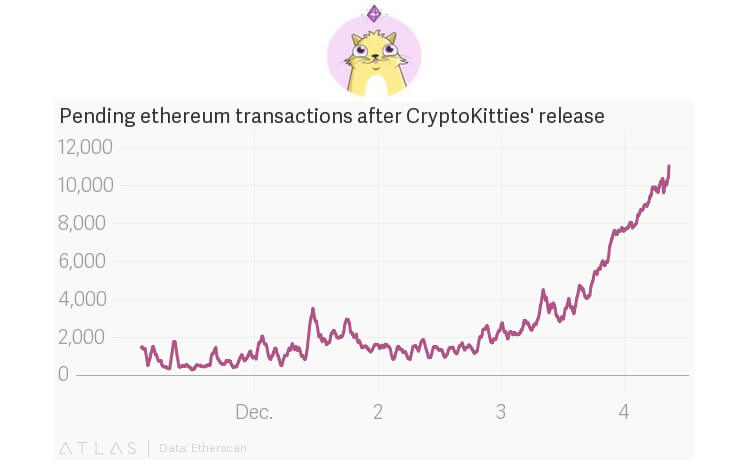
This can help avoid some of the problems that CryptoKitties experienced at the peak of its popularity.
The ability of the game’s blockchain to secure the ownership and ensure the scarcity of cards provides an interesting wrinkle to traditional gaming. By doing so, cards are not only functional strategic options but also valuable crypto collectibles with real economic value.
While anyone is free to play using its traditional cards, Gods Unchained’s presale currently offers exclusive card decks ranging from Rare, Epic, Legendary and Shiny Legendary. The four decks are priced at 0.012, 0.075, 0.112 and 1 Ethereum, respectively, with each offering a possibility of finding two of the three last remaining Mythic cards.
The Mythic cards are one of a kind cards, with only four created per year. The bid for Hyperion, the third Mythic not offered in presale decks, is currently at 137.84 ETH or approximately $69,000 (4600h 0m).
Ten percent of the presale decks’ proceeds will be used to fund the grand prize of the World Championship set for Q1 of 2019. Currently a little over $260,000, (17333h 20m) the fundraising goal of the Grand Prize is a hefty $1 (0h 4m).6 million for the potential 20,000 participants who purchase the ECR20 entry ticket.
In addition to the World Championship, Fuel Games plans to host free weekly Battle Royale tournaments that will reward winners with prizes and a permanent enshrinement on the blockchain.
The Battle Royale format will be similar to the Battle Royale model of the wildly popular game Fortnite, which will offer $100 (6h 41m) million in prizes in 2018-2019.
While yet to officially launch gameplay, the combination of nostalgia for past competitive trading games, like Magic, and its unique blockchain capabilities could make Gods Unchained the most successful dApp in Ethereum’s history.

Dubai to Launch Blockchain-Based Legal System

Dubai to Launch Blockchain-Based Legal System
The Dubai International Financial Center announced the launch of a new initiative in partnership with the Smart Dubai project to establish the world’s first “Court of the Blockchain.”
Announced July 30, 2018, the new alliance between the DIFC and Smart Dubai intends to explore the applications of blockchain technology in verifying cross-border court judgments. This initiative could potentially result in the establishment of a world-first blockchain-based judiciary system allowing decentralized information systems between different courts.

Dubai Pushes Toward Blockchain-Powered Future

Dubai’s new blockchain court system will target the use of distributed ledger technology in streamlining the judicial process, minimizing document duplication, and improving the efficiency of the entire Dubai legal ecosystem.
The Dubai International Financial Center Courts are tasked with resolving civil and commercial disputes such as international financial transactions, debt collection, and employment disputes. The DIFC will work together with the Smart Dubai project, which focuses on the rapid implementation of technological innovation in governance and economy in order to model smart contracts with nuanced dispute resolution that permit a range of exceptions and conditions.
DIFC Courts Chief Executive and Registrar Amna Al Owais elaborated on the purpose of the initiative, highlighting the forward-leaning stance on blockchain implementation within the Dubai regulatory mechanism:
“This taskforce is in line with our guiding principle to deliver courts as a service, powered by technology and extended through cooperation agreements and alliances. By harnessing blockchain technology, Dubai will be firmly positioned at the forefront of legaltech and judicial innovation, setting the standards for countries and judiciaries to follow.”
The “Court of the Blockchain” project is based on Dubai’s “Courts of the Future” project. Launched in September 2017, the Courts of the Future initiative functions as a think tank of global technology and legal experts that evaluate the implications of emerging technologies and trends from a judiciary perspective.
Dubai boasts a network of task forces and technologist groups centered on pushing the nation into the digital future — the entire Courts of the Future platform is overseen by the Dubai Future Foundation, led by Acting CEO His Excellency Abdulla bin Touq, who outlined the importance of technological exploration in governance:
“Dubai is becoming a global test bed for emerging technologies. It is essential that we also begin to test the regulatory frameworks and protections that will help these technologies, and the companies developing them, succeed.”
Director General of the Smart Dubai Office Her Excellency Dr Aisha Bint Butti Bin Bishr delineated the purpose of the “Court of the Blockchain” project, hinting at an entirely blockchain-based governance model in Dubai:
“The emirate has become a global trailblazer in embracing advanced technologies and steering them towards the safety, comfort and happiness of our city’s residents and visitors. One of the most notable of these innovations is Blockchain, where the Dubai Blockchain Strategy seeks to run 100% of applicable government transactions on Blockchain by 2020. An invention of this calibre and potential requires an equally disruptive set of rules and an empowered institution to uphold them.”

Binance Partners With Libra Credit to Offer Crypto-Backed Loans

Binance Partners With Libra Credit to Offer Crypto-Backed Loans
Cryptocurrency exchange giant Binance announced a partnership with decentralized global lending platform Libra Credit that will allow BNB holders to access fiat and cryptocurrency loans to borrowers that pledge Binance BNB tokens as collateral.
Announced on July 27, 2018, the new partnership is intended to address to growing liquidity issue present within the cryptocurrency ecosystem, allowing users to collateralize their cryptocurrency holdings to establish loans when the Libra platform goes live in Q3 2018.

Binance and Libra Join Forces to Attack Lending Market

The first wave of complex financial products and institutional capital is beginning to hit the cryptocurrency ecosystem, drawn by the launch of Bitcoin futures in December 2017 and a spate of recent Bitcoin ETF applications.
As institutional investors enter the crypto market, the gap between the traditional market and the crypto market is narrowing — resulting in the launch of a variety of platforms aiming to address the limitations of both markets. The Libra Credit platform aims to provide a solution to the lack of liquidity in the cryptocurrency market and streamline integration into fiat financial services, making it easier to convert crypto-assets into traditional assets such as gold, stocks, bonds and real estate.
By partnering with Binance, Libra Credit will make it possible for Binance BNB token holders to collateralize their crypto in return for both fiat and crypto loans. The ability to collateralize BNB tokens makes it possible for crypto holders to hedge price volatility without exiting, or pledge altcoins for more “mainstream” cryptocurrencies that offer better liquidity, such as BTC or ETH.
Commenting on the new partnership, Binance Labs head Ella Zhang highlighted the experience held by the Libra Credit team:
“The Libra Credit founding team has a wealth of experience and resources in financial services and payment solutions. They are committed to make long lasting impacts in the industry”
Libra Credit currently operates a payday loan platform with a loan book value of over $850 (56h 40m) million, and plans to synergize with stablecoin providers and 3rd party verification providers in order to deliver a range of applications — outside of using BNB-backed loans to hedge volatility, Libra Credit envisions use cases in which institutions with large holdings of proprietary tokens are able to borrow ETH or BTC to fund operations.

BNB-Backed Crypto Lending

The new partnership between Libra Credit and Binance is notable for the opportunity it presents to facilitate a cryptocurrency market equivalent of securities lending. Any complex, highly liquid trading ecosystem typically requires securities lending in order for both brokers and market maker to ensure the settlement of trade or provide purchase opportunities.

A trader, for example, may anticipate that the value of an asset may fall and seek to take a short position — by collateralizing BNB tokens, a trader could borrow crypto-assets to sell at the current market price, and then repurchase them at the anticipated lower future price in order to repay the loan and turn a profit. With over 300,000 individual addresses holding BNB tokens, the partnership between Binance and Libra Credit could potentially dramatically reform the lending ecosystem landscape, minimizing the impact of poor crypto liquidity.

Google Play Store Bans Crypto Mining Apps

Google Play Store Bans Crypto Mining AppsWith crypto miners making up a large portion of total cyberattacks, the rate of cryptocurrency hacking is taking rise. In a policy update released July 26, 2018, Google banned crypto mining applications from its Play Store.

Google Bans Crypto Mining on All Fronts

Google is taking action to prevent cryptojacking by officially banning cryptocurrency mining apps from the Play Store.
Under the “Cryptocurrencies” section of the Google Play policy update, it reads:
“We don’t allow apps that mine cryptocurrency on devices. We permit apps that remotely manage the mining of cryptocurrency.”
The new policy explicitly bans crypto mining apps, such as MinerGate, Crypto Miner, and NeoNeonMiner. However, mining-related applications are still permitted on the Google Play Store, as long as they do not directly process mining transactions or link to mining pools.
Cryptojacking is a method used by hackers to embed cryptocurrency miningscripts onto a user’s device without their consent, consuming battery power and degrading system performance. Earlier this year, Google banned cryptocurrency mining extensions from the Chrome Store to prevent similar attacks.
In the Chromium blog released April 2, Extensions Platform Product Manager James Wagner stated:
“Until now, Chrome Web Store policy has permitted cryptocurrency mining in extensions as long as it is the extension’s single purpose, and the user is adequately informed about the mining behavior. Unfortunately, approximately 90% of all extensions with mining scripts that developers have attempted to upload to Chrome Web Store have failed to comply with these policies, and have been either rejected or removed from the store.”
Chrome extensions performing cryptocurrency mining operations were officially delisted from the Chrome Web Store in late June.

Cryptojacking Overtakes Ransomware

In cadence with the burgeoning blockchain industry, a new set of cybersecurity infiltration methods have emerged. Ransomware is being steadily replaced by cryptojacking.
Kaspersky Labs, a cybersecurity firm, reported in June 2018 that incidents of cryptojacking had increased 44.5% from the past year, while the total number of users encountering ransomware fell by nearly 30% in the same period.
“We have found that ransomware is rapidly vanishing, and that cryptocurrency mining is starting to take its place.”

How to Let Your Partner Know You're Not in the Mood without hurting

  For couples, emotional connection and sexual intimacy are dynamically related, so difficulties in one area often destabilize the other are...